Why PI Tag Naming Conventions Are Important
PI Tags are the lifeblood of your PI System, every value you trend, analyze, or report on starts with a tag. But when you have thousands (or millions) of tags, poor or inconsistent naming creates serious headaches:
- 🔍 Hard to find the right data
- ⚙️ Confusing for new users and engineers
- 💥 Risk of using the wrong tag in calculations or displays
- 🏭 Difficult to manage plant expansions, migrations, and cleanups
- 📊 Inconsistent data quality reporting
- ❌ Harder to decommission, rename, or troubleshoot servers and equipment
A solid, well-documented naming convention makes your PI System easier to navigate, more maintainable, and much more reliable.
What Makes a Good PI Tag Name?
A well-structured PI Tag name should be:
- Descriptive
- Consistent
- Unique
- Scalable
- Easy to read and parse (by both humans and systems)
Common PI Tag Naming Standards
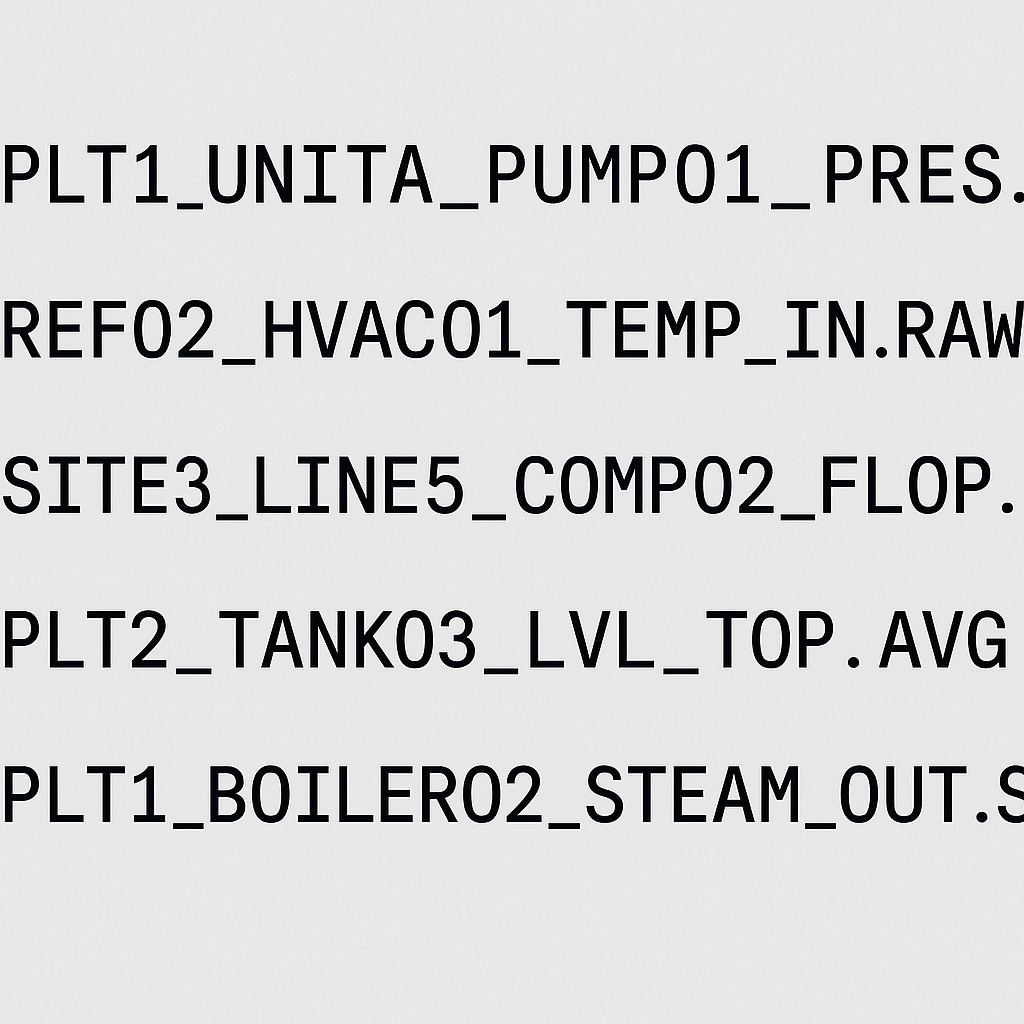
There’s no one-size-fits-all, but here are common components used in industrial systems:
| Component | Example | What It Represents |
|---|---|---|
| Area/Plant | PLT1, REF01 | Physical location or facility |
| Unit/Process | UNITA, HVAC | Subdivision within the plant |
| Equipment/Asset | PUMP01, TANK2 | Specific equipment |
| Measurement/Point Type | TEMP, PRESS, FLOW | What is being measured |
| Measurement Location | IN, OUT, TOP | Where on the asset |
| Data Type/Signal Type | PV, SP, OP | Process Value, Setpoint, Output |
| Tag Suffix (optional) | _RAW, _AVG, _ALM | Type of value, aggregation, or alarm |
Example:
Tag Name: 03PI10012.PV
Tag Description: PLT1 UNITA PUMP01 PRESS OUT
Meaning: Pressure reading at the outlet of Pump 01 in Unit A at Plant 1
PI Tag Naming Convention Best Practices
- ✅ Keep it under 255 characters (PI Tag name max limit)
- ✅ Use clear separators (like
-or_) to break sections - ✅ Avoid special characters (stick to A-Z, 0-9,
_,-) - ✅ Document your convention in a central place
- ✅ Version control and regularly review your standards
- ✅ Align with your AF structure if using PI Asset Framework
- ✅ Use leading zeros for numeric values (e.g.
PUMP01, notPUMP1) - ✅ Be consistent with abbreviations
When You Don’t Have a Naming Standard (Yet)
If your PI System evolved over time without one, it’s never too late. Start by:
- Auditing your existing tags
- Identifying common patterns (good or bad)
- Defining your new convention
- Mapping existing tags to the new standard (where possible)
- Applying the new convention for all new projects moving forward
Tools like Tycho Data Osprey can help identify inconsistencies, duplicates, and anomalies, a huge help in cleanup projects.
Ready to See It in Action?
If your team depends on PI System data to keep your plant running safely and efficiently. Osprey is built for you.
 Tycho Data